A missing tooth can make it harder to chew, speak, and smile. Two common ways to replace a missing tooth are a dental implant and a dental bridge. Both fill the gap, but they work in different ways and need different care. When comparing a dental implant vs. a bridge, think about the health of your nearby teeth, your jawbone, your budget, and your future needs. The best choice depends on your oral health and personal needs, not just the starting cost.
Dental implants in Sacramento may be suitable when the jawbone can support an implant and the gums are healthy enough for treatment. A bridge may be a good option when a fixed replacement is preferred, or an implant is not suitable. A dental examination can help explain the benefits, limits, treatment time, and expected costs of each choice.
What Is a Dental Implant?
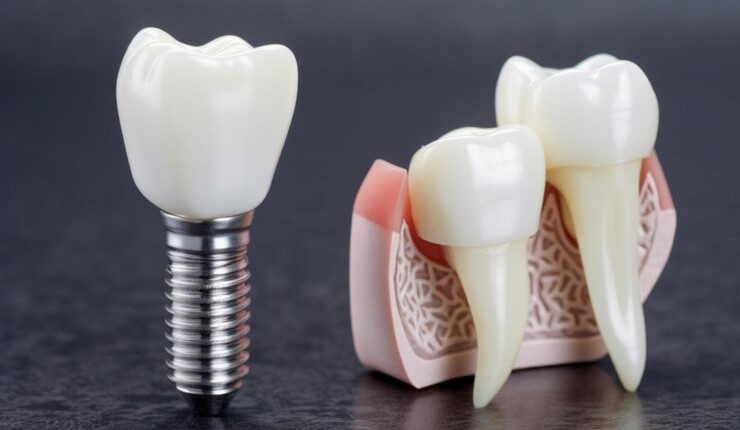
A dental implant is a small post placed in your jawbone to replace the root of a missing tooth. Once it joins with the bone, a connector and a crown are added to make a new tooth.
Implants do not usually rely on neighbouring teeth for support. This can help preserve healthy teeth beside the gap.
Potential benefits include:
- Replacing a missing tooth with a fixed restoration.
- Helping maintain chewing function.
- Avoiding the need to reshape nearby healthy teeth for support.
- Providing a replacement that can be cleaned as part of daily oral care.
Implant treatment involves surgery and healing time. Bone grafting may also be needed if there is not enough bone to support the implant.
What Is a Dental Bridge?
A dental bridge fills a gap by attaching a replacement tooth to supporting teeth on one or both sides. A common bridge uses crowns fitted over the neighbouring teeth to hold the replacement tooth in place.
A bridge may be suitable when nearby teeth already need crowns or when implant surgery is not preferred or possible.
Potential benefits include:
- Filling the gap without placing an implant in the jawbone.
- Providing a fixed replacement tooth.
- Often requiring less overall treatment time than an implant.
- Restoring appearance and helping with chewing.
A traditional bridge usually requires reshaping the supporting teeth. These teeth may need extra care because they help hold the replacement in place.
Dental Implant vs Bridge: What Are the Main Differences?
Both options can replace one missing tooth, but they work in different ways and affect the nearby teeth differently.
|
Feature |
Dental implant |
Dental bridge |
|
Support |
Anchored in the jawbone | Supported by nearby teeth |
|
Treatment |
Includes surgery and healing |
Usually does not require implant surgery |
|
Nearby teeth |
Usually left unaltered |
May need reshaping for crowns |
|
Treatment time |
Often several months |
Often completed in less time |
|
Cleaning |
Brushing and careful cleaning around the implant |
Brushing and cleaning under the bridge |
| Cost | Often higher at the start |
May have a lower initial cost |
Both options need regular dental check-ups and daily cleaning. Neither lasts forever, and the lifespan depends on oral hygiene, bite forces, materials, and other factors.
How Do You Choose the Right Tooth Replacement?
The best option depends on your oral health, treatment needs, and preferences. A dentist in Sacramento can examine the area around the missing tooth and review the health of the gums, nearby teeth, and jawbone.
Factors to discuss include:
- Condition of nearby teeth: Healthy teeth may not need reshaping for an implant, while teeth that already need crowns may make a bridge worth considering.
- Jawbone and gum health: Adequate bone and healthy gums help support implant treatment.
- Treatment time: A dental implant may take several months to heal before the final crown is added.
- Cost and insurance: Compare the full cost, including any extra treatment and future care.
- Daily care: Both options require daily cleaning, but the cleaning method differs.
A dentist near you can explain the pros and cons of each option and help you choose what suits your needs.
What Are the Other Single Tooth Replacement Options?
The main single tooth replacement options include implants and bridges, but a removable partial denture may also be considered in some cases. It can replace one or more missing teeth and be removed for cleaning.
The most suitable choice depends on the location of the missing tooth, the condition of the mouth, comfort, and cost. Not every option is right for every person.
Restore Your Smile with the Right Tooth Replacement!
Missing a tooth does not have to make eating difficult or affect your smile. At Miyasaki Dental, you can learn about different ways to replace missing teeth. The dental team will explain the treatment, the cost, and how to care for your new teeth. Take time to understand your options and choose the one that best fits your needs and helps keep your mouth healthy.
Book your consultation today to explore your options for replacing a missing tooth and enjoying a more complete smile!
FAQs
Which option is usually faster?
A dental bridge is often ready sooner than an implant. An implant needs time to heal and join with the jawbone. The total time depends on your treatment plan.
Does getting a dental implant hurt?
Your dentist uses a local anesthetic to numb the area during implant treatment, which helps control pain. You may have some pain or swelling afterward, but it usually gets better as your mouth heals.
How long do implants and bridges last?
Both can last for many years with proper care, but neither lasts forever. Cleaning your teeth daily, visiting your dentist regularly, and managing teeth grinding can help them last longer.
Can I replace a dental bridge with an implant later?
Yes, this may be possible in some cases. It depends on the health of your gums and jawbone, the condition of nearby teeth, and the space available. Your dentist will check your mouth to see if an implant is a good choice.